
In Memoriam: Pelayo Correa (1927–2025)

Article Sidebar
Main Article Content
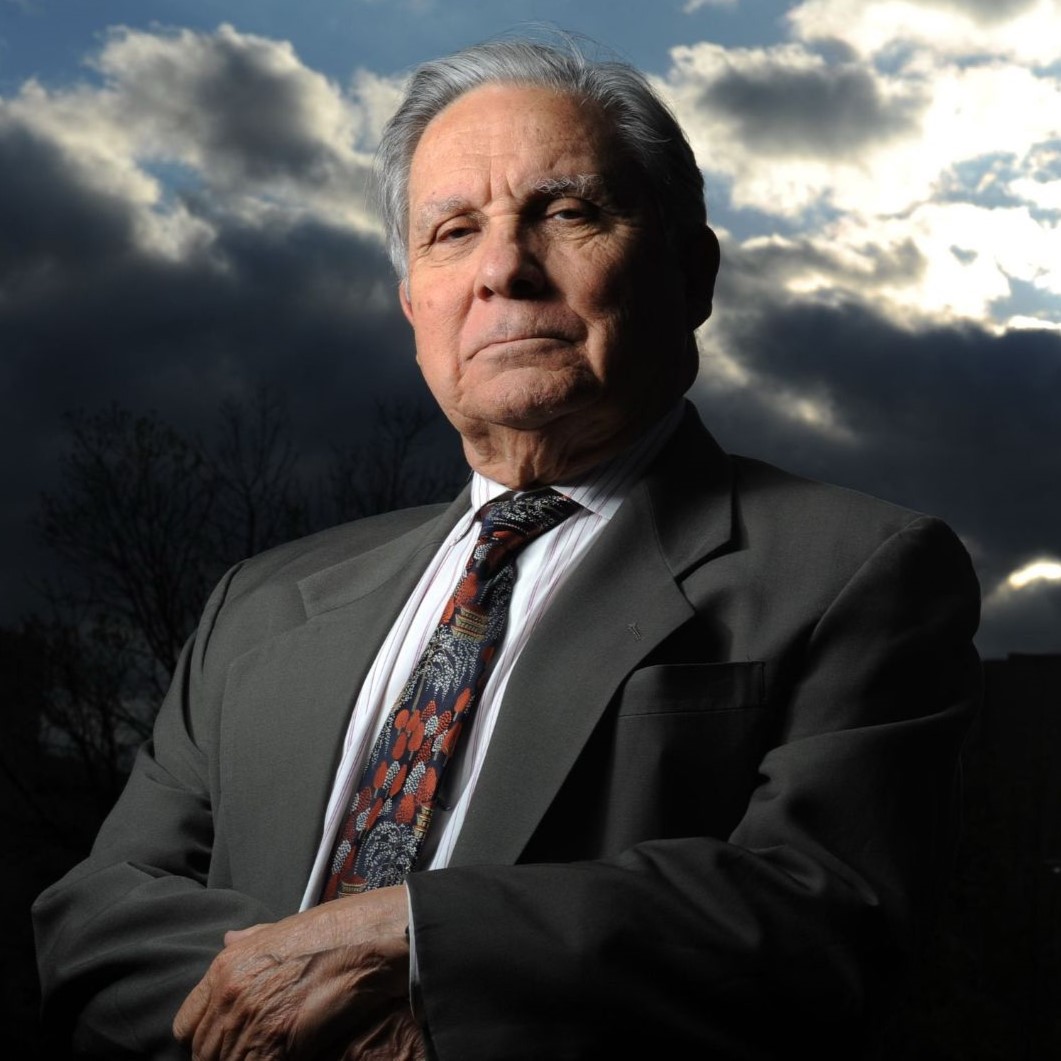
Pelayo Correa, born in Sonsón, Antioquia, in 1927, was one of the most influential figures in cancer epidemiology and pathology in Latin America and worldwide. His work transformed the understanding of gastric carcinogenesis and gave rise to one of the most solid and longstanding population-based registries on the continent. His scientific life - defined by rigor, curiosity, and public service - leaves an enduring legacy for generations of researchers.
Professor Correa graduated as a physician from the University of Antioquia in 1949, where he completed his thesis on cancer statistics in the department —pioneering work that sparked his lifelong interest in differences in cancer risk across populations. This early study took him to Emory University in the United States, where he trained as a pathologist and solidified his etiologic vocation: to understand the causes of disease, not only its morphological expression. After completing his training, he returned to Colombia and joined the Universidad del Valle.
During a 1961 congress, his presentation on cancer patterns in Cali drew the attention of Dr. Harold Stewart of the National Cancer Institute (NCI), who shared the data with Dr. William Haenszel. From that exchange, Dr. Haenszel traveled to Cali and, together with Professor Correa, helped establish the Cali Population-Based Cancer Registry (RPCC), the first in Latin America and today one of the oldest in the world. Dr. Haenszel also served as his mentor in epidemiology, contributing to the design and conduct of the investigations that followed in subsequent decades, aimed at clarifying the determinants of gastric cancer.
The strength of the Cali Registry became evident early on. The RPCC publication in the Journal of the National Cancer Institute in April 1966 coincided with the release of the first volume of Cancer Incidence in Five Continents(January 1966), which included RPCC data. This convergence placed the Cali registry within the foundational landmarks of global cancer surveillance. At a time when the world was beginning to standardize comparative incidence measurement, Professor Correa’s work provided rigorous data from Latin America, demonstrating that his epidemiological vision was not only aligned with global developments but contributed to them from the outset.
- Stomach Neoplasms
- Helicobacter pylori
- Follow-Up Studies
- Biomarkers, Tumor
- National Cancer Institute (U.S.)
- Registries
Luis Eduardo Bravo, Universidad del Valle
 https://orcid.org/0000-0002-9708-0312
M. Constanza Camargo, Division of Cancer Epidemiology and Genetics
Maria Blanca Piazuelo, Vanderbilt University Medical Center
Nubia Muñoz , Consultor independiente
Doll, R.,Payne, P.,Waterhouse, J.A.H., eds (1966),Cancer Incidence in Five Continents, Vol. I,Union Internationale Contre le Cancer, Geneva https://publications.iarc.who.int/Non-Series-Publications/Other-Non-Series-Publications/Cancer-Incidence-In-Five-Continents-Volume-I-1966 DOI: https://doi.org/10.1007/978-3-642-85849-9
Downloads





This work is licensed under a Creative Commons Attribution-NonCommercial 4.0 International License.
The copy rights of the articles published in Colombia Médica belong to the Universidad del Valle. The contents of the articles that appear in the Journal are exclusively the responsibility of the authors and do not necessarily reflect the opinions of the Editorial Committee of the Journal. It is allowed to reproduce the material published in Colombia Médica without prior authorization for non-commercial use